Hi there!
Welcome to FinSoar. Happy Thanksgiving! Retailers are caught between a rock and a hard place this Black Friday. Turkey prices might actually be lower, and Gen Z is building a new work trend that has Boomers baffled:
The Black Friday Paradox: Record Crowds, Tighter Wallets
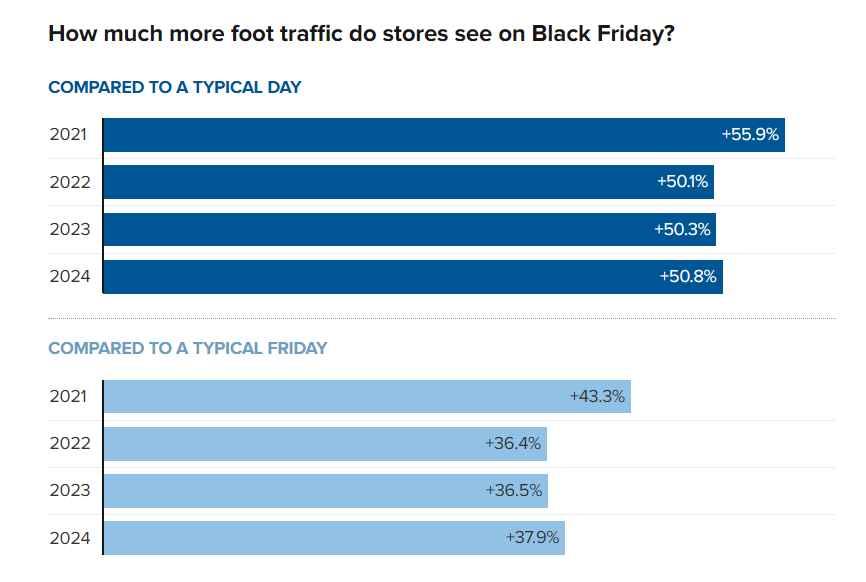
Black Friday faces a strange contradiction this year. A record 187 million Americans are expected to shop between Thanksgiving and Cyber Monday, according to the National Retail Federation. But average spending per person is projected to fall to $890, down from $902 last year. The disconnect presents a real problem for retailers who depend on the holiday season to drive a third of their annual profits. Thanksgiving online sales rose 6% to $8.6 billion, Salesforce data showed. Black Friday is forecast to generate $18 billion in US online sales. Those numbers look healthy on the surface. Dig deeper, and the cracks are pretty obvious. Consumer confidence fell to a seven-month low in November. Unemployment is near a four-year high. Shoppers are more cautious and selective about where they spend. The culprit? Tariffs. President Trump's import duties have added roughly 4.9 percentage points to retail prices, according to the Tax Foundation. Market research firm Circana found that 40% of all general merchandise sold in September saw price increases of at least 5% compared to the first four months of the year. Toys got hammered the worst. 83% of toys sold in September saw 5%+ price increases. The Toy Association says nearly 80% of toys sold in the US are made in China. Retailers are caught in a bind. They want to offer aggressive discounts to draw shoppers in, but many are absorbing tariff costs to avoid drastically raising prices. That means they can't discount as deeply and still turn a profit. "There will be discounts and deals, but I think they will be more surgical and selective," Neil Saunders at GlobalData told CBS News. "They will perhaps discount fewer items, and some discounts will be less generous." Lisa Cheng Smith, who runs Yun Hai Taiwanese Pantry in New York, said her costs jumped 20% to 50% this year because of tariffs. In past years, she offered a 15% Black Friday discount. This year, she's unsure how much she can afford to cut. The spending is concentrated among the wealthy. The richest 10% of Americans — those earning at least $250,000 annually — accounted for about 48% of all consumer spending in the second quarter, up from around 35% in the mid-1990s. "Increasingly, the headline spending is being driven by a narrower subset of consumers," said Michael Pearce at Oxford Economics. Shoppers are also turning to AI. Half of consumers, and 71% of Gen Z, plan to use AI this Black Friday to compare prices, track budgets, and generate gift ideas, Bank of America found. Online shopping has fundamentally changed Black Friday. There's no more sprinting into stores before sunrise to snag 24-hour doorbusters. Sales now start weeks early and stretch into Black November. Many retailers began promotions in early November, diluting the urgency that once defined the day. "Black Friday is an obsolete concept and has now become just a point in time," said Andy Tsay at Santa Clara University's Leavey School of Business. The NRF expects total holiday sales from November through December to surpass $1 trillion for the first time. But sales growth is expected to slow to 3.7% to 4.2%, down from 4.8% last year. Record crowds with tighter budgets and massive sales projections with cautious forecasts…Black Friday 2025 is all contradictions.
|
Gen Z Discovers Accounting Is Boring, Lucrative, and Hiring
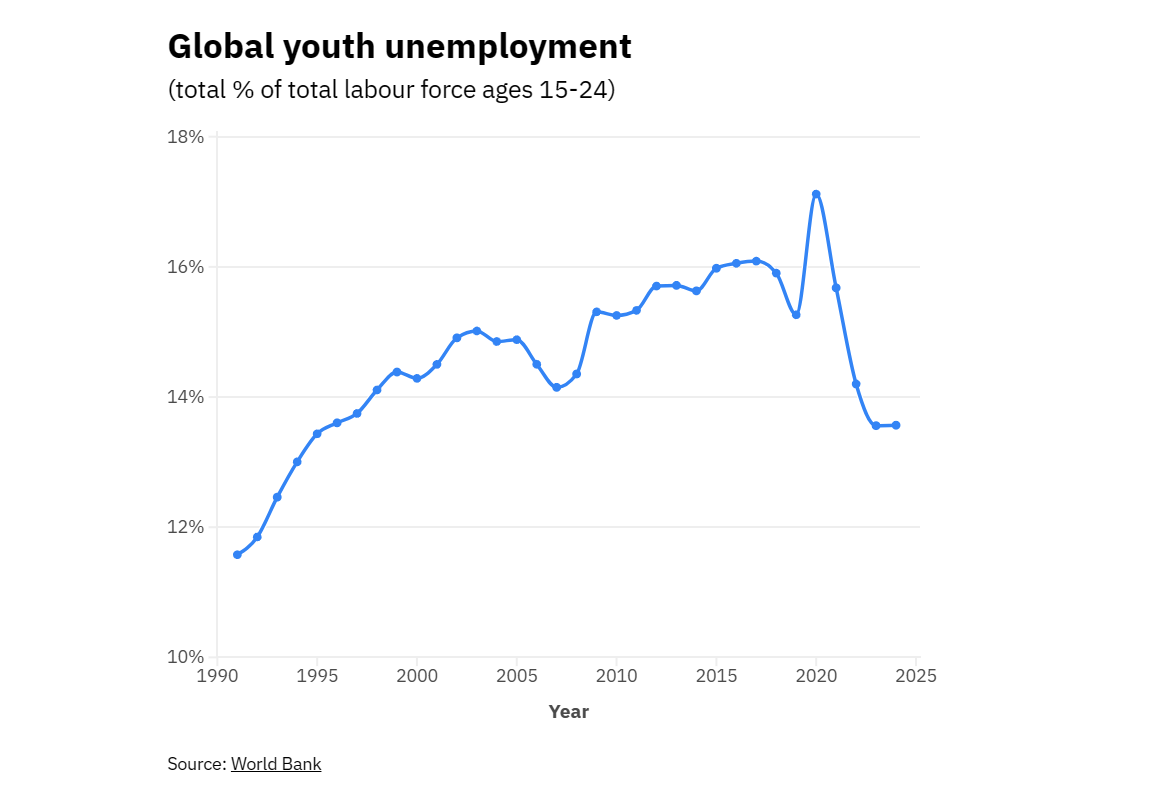
While millions of Gen Zers struggle to break into white-collar work, one supposedly "boring" profession is begging them to apply: accounting. Tax accountants are the hottest seasonal job on the market right now, according to Monster's analysis of job postings. That's a stunning reversal for a field that ranked as the second most stereotypically boring job in America in a 2022 study. The opening? Baby boomers are fleeing. About 340,000 accountants have already left in the past five years. Another 75% of those remaining are expected to exit in the next decade. The pay makes the boredom bearable. Accountants earn an average of $93,000 annually, with experienced professionals reaching $122,000. Certified public accountants can pull nearly $200,000. At California State University Northridge, hundreds of students participated in the IRS Volunteer Income Tax Assistance program in 2024, helping more than 9,000 low-income Americans claim nearly $11 million in tax refunds. The program director, Rafael Efrat, told Fortune that "once they actually engage in the practice and see how it plays out in a real world, it changes people's mind and views." The timing couldn't be better. Gen Z faces what the British Standards Institution called a "job-pocalypse." A study of 850 business leaders across seven countries found 41% said AI was allowing them to cut employees. Another 31% said their organization looks at AI solutions before considering hiring a person. Unemployment for workers ages 20-24 rose 2.1 percentage points since early 2023. For ages 16-19, it jumped 3.5 points. Meanwhile, unemployment for workers over 25 barely moved. In the UK, 1.2 million graduates competed for just under 17,000 entry-level positions in 2024. The World Economic Forum projects 78 million new roles by 2030, but 22% of current jobs will undergo structural change. About 41% of organizations expect to reduce their workforce before 2030 due to automation. Some Gen Zers are taking unconventional routes entirely. Luxury nannying has emerged as a surprisingly lucrative path, with positions paying up to $250,000. Cassidy O'Hagan, 28, ditched her medical sales career to nanny for ultra-wealthy families. She now earns between $150,000 and $250,000 with benefits including a 401K, healthcare, chef-prepared meals, and international travel via private jet. "My orthopedic medical sales job could never compete," she said. The number of billionaires globally jumped from 322 in 2000 to over 3,000 today, creating a boom in private staffing. There are now an estimated 1,000 staffing agencies worldwide, 500 in the US alone. Whether it's crunching numbers or changing diapers for the ultra-rich, Gen Z is finding paychecks where older generations see tedium.
|
Thanksgiving Dinner Is Cheaper, More Expensive, and Completely Confusing
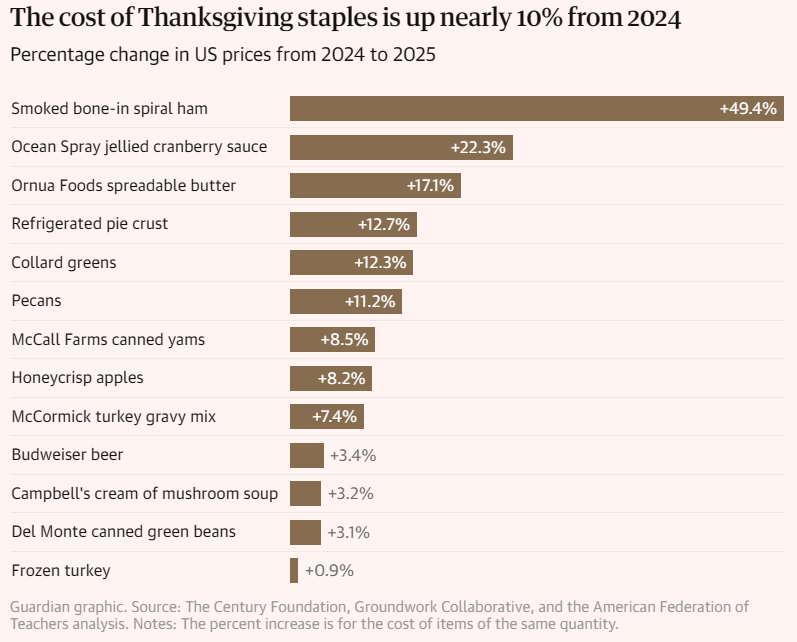
Welcome to the Thanksgiving food cost wars, where everyone is using different numbers, and Americans are left wondering what anything actually costs. The American Farm Bureau Federation says Thanksgiving dinner for 10 people declined 5% this year to $5.52 per person, the third consecutive year of decreases. Wells Fargo pegs the drop at 2% to 3%. But analysis found prices are nearly 10% higher, particularly for name brands. The confusion stems from what you put in your basket and where you shop. Aluminum products got crushed by tariffs. Canned cranberry sauce is up 22%, creamed corn up 21%, Reynolds Wrap heavy-duty aluminum foil up 40%. Turkey prices tell two completely different stories. Wholesale prices jumped 75% from last year to more than $1.70 per pound, according to USDA data cited by Purdue University. Bird flu culled more than 2 million turkeys this year. But retail turkey prices? Holding steady or even falling. Stores are eating the increased costs as "loss leaders" to get customers through the door. "Retailers use turkeys as a loss leader," said David Ortega, a food economist at Michigan State University. "They make up for that with other items in the basket consumers buy." Walmart is touting a Thanksgiving meal for under $40, 25% cheaper than last year. The catch? It has 15 products versus 21 last year, with more store brands replacing name brands. Walmart swapped Ocean Spray jellied cranberry sauce for a bag of fresh cranberries. One fewer can of Campbell's cream of mushroom soup disappeared from the basket. Trump has seized on these deals. "Grocery prices are way down," he said earlier this month, calling Walmart's promotion "the greatest." The White House released multiple statements celebrating Thanksgiving discounts as proof that his policies cooled inflation. Reality is messier. A Politico/Public First poll found 55% of Americans blame Trump for rising grocery costs. Overall, food prices at home are up 2.7% over the last year. Even 20% of people who voted for Trump in 2024 now blame him for their grocery bills. "Folks are struggling, and those misleading statements don't help," Nick Levendofsky of Kansas Farmers Union told Politico. The confusion is pushing people to restaurants. Data shows Thanksgiving reservations are up 13% year-over-year. Olo, a catering platform, reported a nearly 100% increase in large orders compared to last year. The irony is that restaurant prices are rising faster than grocery prices, but at least the menu is consistent. |